

4 Lessons of the Humanitarian System Learnt from the START Network
- Nov 4, 2017
- 3 min read
During my 4-month tenure at the Start Network, an enthusiastic team with an authentic passion for change in the current humanitarian system, shared with me their knowledge and experiences with the organization.
1. A solution to the broken humanitarian system
There is a growing concern from a sector of the international development community about how the current humanitarian system is broken. This is evidenced in many developing countries that adopt a slow, politicized and ineffective reactive model of post-disaster funding. This type of model resembles begging bowls held out for collecting charity from those better-off countries. Results from UN appeals, for example, show that the capacity of the international humanitarian community to fund disasters through donations is constantly outpaced by the cost of disasters. Many of those crises never even make the headlines, so there’s even less chance for appeals to reach a funding goal.
Start is propelling change in humanitarian aid with the power and knowledge of the network, which allows it to make better and faster decisions for funding emergency response when crises hit. The DFF and the Start Fund are two ways that Start enables this idea. Both aim to provide early funding that can significantly reduce cost of response to better localized network partners on the frontline of a crisis.
2. The innovative Start Fund responds to gaps in emergency funding
[endif]--The Start Fund is a multi-donor fast-response fund managed by partner NGOs, which provides early response to gaps in humanitarian funding constantly affecting three types of crises:
Under the radar, i.e. emergencies that receive little or no funding, or little media attention limiting their exposure to donors
Spikes in chronic humanitarian emergencies
Anticipation crisis

The Fund offers grants to member organizations only for small- and medium-scale emergencies. These funds are authorized to 45-day projects and within 72 hours of a given alert.
When a crisis alert is triggered by a member or partner, a Start Fund liaises with the network NGO members to jointly analyze the emergency. NGOs then decide how to allocate those resources based on information they share with each other, and award the requested funds to the organization in the best position to lead the response.
This process, better illustrated below, shows the Fund’s calculated actions in responding to emergencies based on agile collective decision-making.
3. Parametric insurance solutions for developing countries
cellspacing="0" width="100%"
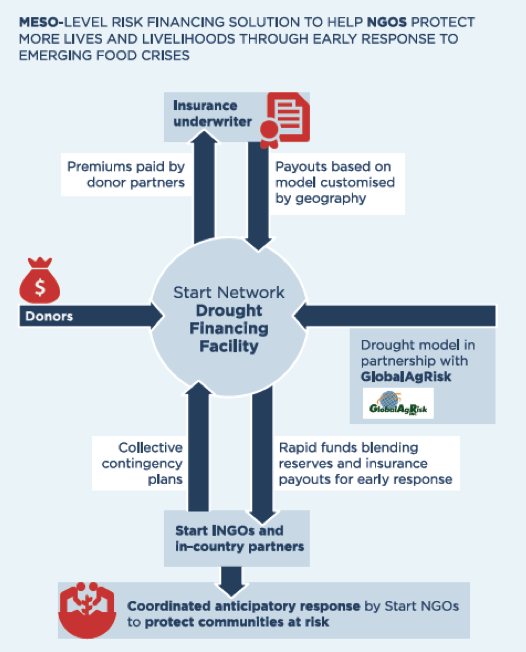
[endif]--I was eager to get involved when I found out how Start was developing a weather index-based insurance mechanism for disaster funding in developing countries. The DFF pilot project is a loan facility for contingency funds and parametric insurance solutions, currently in the implementation stage in Pakistan and Zimbabwe.
The DFF’s objective is to ensure a timely and sustained humanitarian response to emerging food security and livelihood crises through pre-positioned funds. The program is funded by the Humanitarian Innovation Fund (HIF), part of the Enhancing Learning and Research for Humanitarian Assistance (ELRHA) network.
Technical assistance is provided by GlobalAgRisk, a US-based research firm developing financial disaster risk management solutions aiming to build resilience. Their assistance is fundamental in designing a customized drought risk model for each country. The model is a key tool in the project and considers historical data of events, vulnerabilities information, and crop calendars to establish the parameters that would trigger potential payouts.
4. Collaborative work in capacities development through the DEPP
There is great potential development if DEPP can keep engaging in work with different sectors in society and types of organizations. Collaborative work brings new perspectives that enrich decision-making processes or build strategic partnerships for capacity building, or simply for much needed fundraising for example.
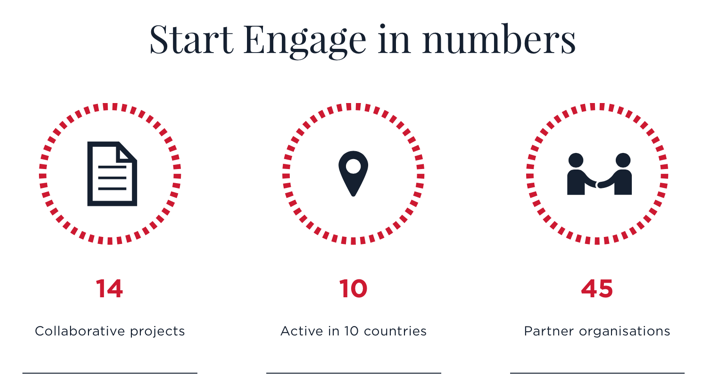
The projects are consortia of different actors that engage different parts of society, like the academia, private and public sector including social enterprises, or multi-lateral bodies. All consortia have a lead agency that is a civil society organization and a member of START.
There is great potential development if DEPP can keep engaging in work with different sectors in society and types of organizations. Collaborative work brings new perspectives that enrich decision-making processes or build strategic partnerships for capacity building, or simply for much needed fundraising for example.
![endif]--![endif]--
Comments